
Penghu with Kids and Grandparents: Island Days, Short Hops & Wind-Aware Planning
Mellow Away editors · 7 min read
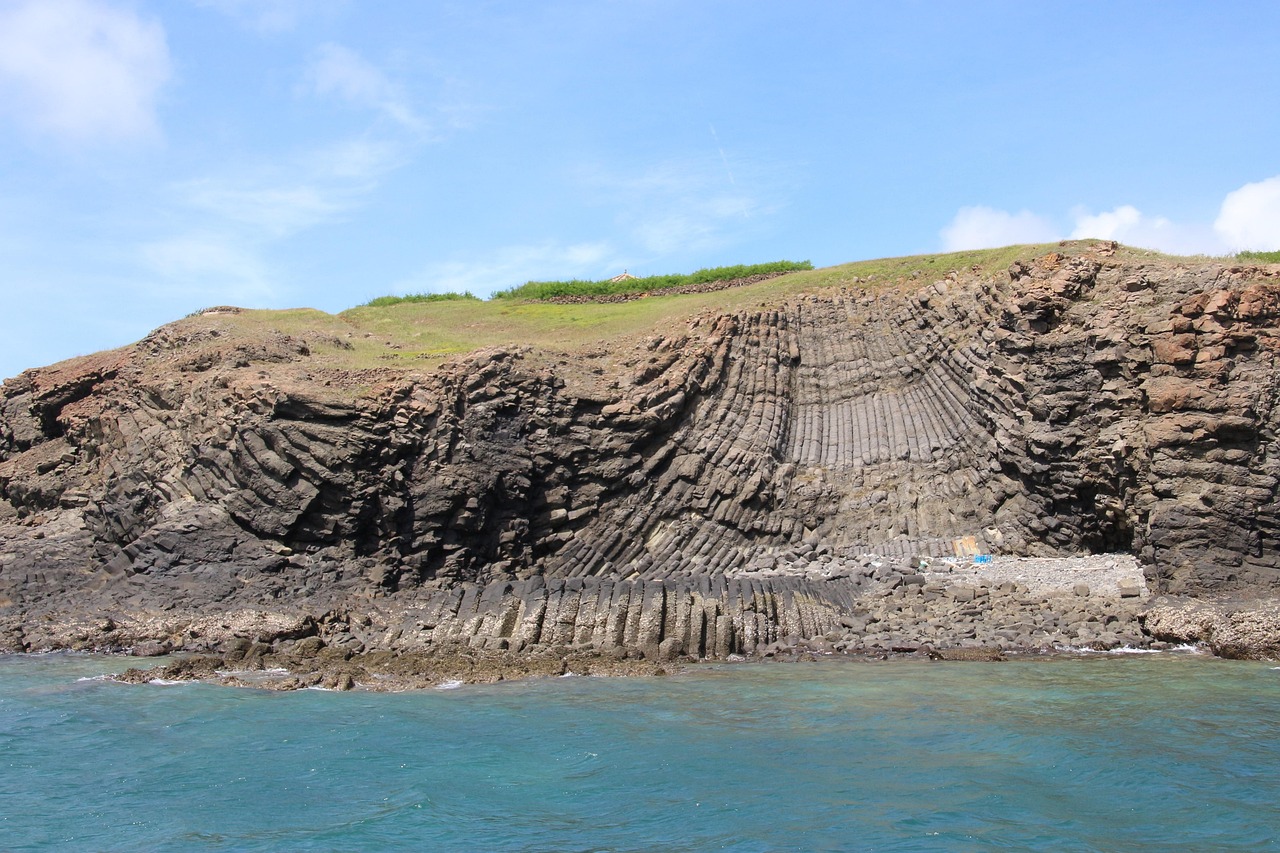
Penghu with kids and grandparents works best as a short island stay with wind-aware planning, not as a rushed add-on after a packed west-coast itinerary. The archipelago sits in the Taiwan Strait, with Magong as the usual base. Recheck official boat, bus, and site hours on the Tourism Administration and Penghu National Scenic Area Headquarters pages before you travel, because wind and weather can change the day.
Getting there: flights first, ferries with a buffer
For most mixed-age groups, a flight into Penghu Airport is the calmer arrival. The official Taiwan Tourist Shuttle—Penghu Airport Express page lists flights to Taipei (Songshan), Taichung, Chiayi, Tainan, Kaohsiung, and Kinmen, and gives the airport information number (06) 922 8188. Book seats you can sit in together, keep carry-on bags light, and do not count on a full Magong walking loop after a late landing.
The official Airport Express (route 004) links the airport with Magong Harbor, the Bus Main Station, and downtown stops. The Scenic Area’s official route page lists a one-way fare of NT$30, paid in cash or with EasyCard, iPASS, or icash. A Headquarters article dated 11 December 2025 says the shuttle runs from 7:20 a.m. to 8:00 p.m. every 40 minutes, and that you can board at the airport or Magong Harbor. Recheck those times the morning you fly.
Ferries are the slower alternative. The Tourism Administration’s marine-transport page, last updated 24 February 2026, gives the crossing as about 1.5 hours on the Chiayi–Magong route and 4.5 to 6.5 hours on the Kaohsiung–Magong route. Not every route runs every day, and weather can stop sailings, so call the operator before you lock the itinerary. Official transfer notes point Magong Harbor travelers to the Harbor Visitor Service Center on (06) 927 2303 for boats to Kaohsiung and to Budai, Chiayi. If anyone would rather avoid a long open-water crossing, keep the flight as the default.
Wind, sun, and when to go
Penghu’s weather is the planning fact that matters most. Taiwan’s Central Weather Administration notes that during the northeast monsoon, from October through April, Penghu frequently records strong winds, defined as average winds of force 6 or above. From May through September, southwest monsoon flow or a typhoon can also bring strong winds. The Scenic Area’s official summer-and-winter notice is direct: summer is extremely hot and dry, so sun protection, hats, sunglasses, and long sleeves are essential; in winter it gets especially windy, and visitors should not stand too close to cliffs.
Winter is not automatically off-limits. The same Headquarters has described fall and winter as a slower, less crowded season, and it points to indoor halls and shuttle-linked walks as a practical way to explore. Plan shade and indoor backups in summer, plan wind and a shorter outdoor loop in monsoon months, and leave a buffer for delayed flights or cancelled boats. Recheck the Central Weather Administration forecast, including any land strong-wind warnings, the day before you go out.
A gentle Magong day
Stay in or near Magong so mornings start without a long transfer. Use Mellow Away’s multi-gen hotel directory to shortlist places with an elevator and a calm breakfast, then verify the details before you book.
A low-stress first day can start at the Penghu Visitor Center, at No. 171 Kuanghua, Magong City, telephone +886-6-921-6445. The Headquarters’ family-service page lists a nursing room there, and a shuttle guide describes exhibits plus a leisure park with shaded paths. Confirm current hours when you arrive; the administration office’s published service time is 8:00 a.m. to 12:00 p.m. and 1:30 p.m. to 5:30 p.m.
From the official Magong Harbor Airport Express stop, the same guide puts you near Penghu Tianhou Temple, Zhongyang Old Street, and Duxingshi Village. Taiwan’s Tourism Administration lists Tianhou Temple at No. 1, Zhengyi Street, with coordinates 119.56403 / 23.564694, and describes it as built in 1604 and Taiwan’s oldest temple, with refined architecture and a historic tablet. The Scenic Area also calls it Taiwan’s oldest Mazu temple. Zhongyang Old Street is described as the earliest developed district in the archipelago, with traditional Minnan-style shopfronts and the Four-eyed Well, more than 400 years old on official pages. A Headquarters half-day historic walk is estimated at two to three hours if you include the wells, the city gate, military housing, and Guanyinting. For a mixed-age group, that full loop is optional. Walk a short stretch, sit down for lunch, and stop while people still have energy.
If the wind or the sun is too much, switch to an indoor hall. The official shuttle guide says the International Square stop is within walking distance of the Penghu Living Museum and the Penghu Marine Geopark Center. The museum presents local culture and history; the Geopark Center focuses on Penghu’s geology. Penghu County cultural-bureau pages list the Living Museum at No. 327, Xinsheng Road, Magong, telephone (06) 921-0405, open Thursday through Tuesday from 9:00 a.m. to 5:00 p.m., with last entry at 4:30 p.m., and closed on Wednesdays, Lunar New Year’s Eve, and other announced days. Confirm those hours on the official museum page before you go.
If energy remains, the Bus Terminal stop is the official connection for Guanyinting Coastal Recreation Area, which the Headquarters describes as having water and children’s playgrounds, with the Xiying Rainbow Bridge as a sunset walking spot. Skip the waterfront if the wind is strong.
A main-island nature day without a long boat
Magong, Huxi, Baisha, and Xiyu (Siyu) are linked by road, including the Penghu Great Bridge, so you can see a distinctive slice of the islands without an outer-island ferry. The official Scenic Area page says the bridge is 2,494 meters long and crosses the Houmen Waterway between Baisha and Siyu. Construction began in 1965 and finished in 1970 so people would not have to rely on boats in that channel; it was re-inaugurated as a two-way bridge in 1996. It is both a traffic route and a scenic stop. The same page notes that the current under the bridge becomes especially fierce in the northeast monsoon. Enjoy the view from a safe public vantage, and skip exposed edges in strong wind.
A good indoor-and-kids anchor on that loop is the Penghu Aquarium in Qitou, Baisha Township. The official aquarium site lists hours as 9:00 a.m. to 5:00 p.m., Monday through Sunday, and the telephone as +886-6-993-3006. The Scenic Area’s attraction page gives the address as No. 58, Qitou, and describes seashore, reef, and ocean exhibits, a 14-meter arched underwater tunnel, touch tanks, and morning and afternoon feeding programs. East of the aquarium it notes Qitou Water Park, with intertidal walking areas and play facilities. Confirm hours and show times on the official site the day you go, and build in a sit-down lunch.
If the group still wants one short geology stop, Xiaomen Islet sits just off northern Xiyu and is connected by a bridge. The official Scenic Area page describes it as only 0.5 square kilometers, an “outdoor geological classroom,” with basalt cliffs, the sea-eroded Whale Cave arch, and the Xiaomen Geological Museum. The family-service page lists a nursing room at the Xiaomen Geological Discovery Hall, No. 11, Xiaomen, Xiyu Township, telephone +886-6-998-2988. Keep this brief, stay back from cliffs in winter wind, and do not add an outer-island boat to the same day.
Outer islands only if energy remains
Qimei’s Twin Hearts Stone Weir is Penghu’s most photographed fishing weir, but it is not a casual add-on. The official Scenic Area page says Penghu has 558 stone weirs, and that Qimei is famous for this one well-preserved weir of basalt and coral, shaped like two hearts. Check the day’s ebb tide if you want to see the complete shape. Boats to the outer islands, including Qimei and Wang’an, leave from the South Sea area of Magong; official transfer notes give the Penghu South Visitor Center on (06) 926-4738 and the South Sea Transportation & Tourism Waiting Room on (06) 927 2376. Sailings depend on weather and season. Treat Qimei as its own unhurried day, or skip it.
A calm stay that still feels complete
A gentle Penghu plan with kids and grandparents often looks like this: a flight into Penghu Airport, the NT$30 Airport Express into Magong, a short historic walk around Tianhou Temple and Zhongyang Old Street with an indoor museum backup, then a separate main-island day for the Great Bridge and the aquarium, with Xiaomen or Guanyinting only if energy remains. Leave Qimei for a third day, or for a later trip, and do not try to combine Penghu with a full Kenting itinerary in the same tired week unless you have time to spare. Recheck official boat, bus, and weather pages the morning you move.