
Fo Guang Shan with Kids and Grandparents: Big Temple Day Near Kaohsiung at an Easy Pace
Mellow Away editors · 8 min read
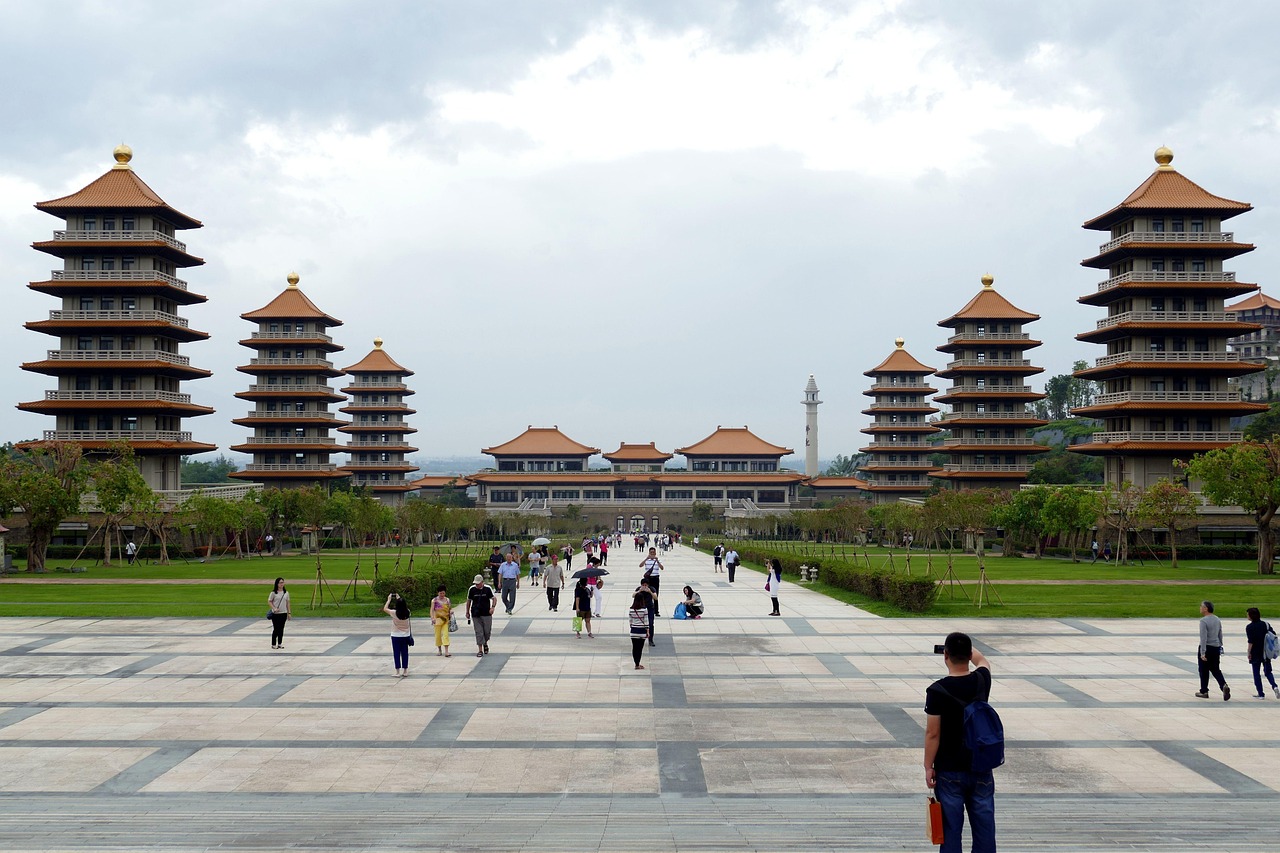
Fo Guang Shan with kids and grandparents works best as one unhurried temple day near Kaohsiung, not as a tight add-on after a packed city morning. The site sits in Dashu District. Taiwan’s Tourism Administration lists the Fo Guang Shan Buddha Museum at No. 1, Tongling Road, with coordinates 120.44524 / 22.75562 and the telephone number +886-7-656-3033. Next door is Fo Guang Shan Monastery, whose official site gives the address No. 153, Xingtian Road and the telephone 07-656-1921. This guide focuses on the museum, which is the easier, barrier-free half for a mixed-age group, and treats the monastery as an optional extra if energy remains.
The museum’s official origin page says it opened to the public on 25 December 2011, after nine years of construction, and was founded to enshrine a Buddha tooth relic. Admission and parking are free. Hours, buses, and restaurant times can change, so confirm them on the official Buddha Museum and Kaohsiung Bus pages before you go.
Getting there from Zuoying and Kaohsiung
The calmest public route for most visiting families is Taiwan High Speed Rail to Zuoying, then Kaohsiung Bus E02, the Harvard Express (哈佛快線), to Fo Guang Shan. The Tourism Administration’s scenic-spot page places Zuoying about 16 kilometers from the museum. Kaohsiung Bus tells riders to board at platform 3 of the Zuoying High Speed Rail bus transfer stop.
The operator’s official timetable page, in effect since 12 May 2025 (ROC year 114), says the route uses National Highway 10 and takes about 35 minutes one way. Weekday departures from Zuoying start at 08:00 on that table, and the last listed return from Fo Guang Shan is 18:30; holiday times differ and are also published there. Recheck the current table the morning you travel. Because freeway rules do not allow standing passengers, Kaohsiung Bus says that if anyone is standing before the bus enters the freeway, the coach may switch to surface roads, skip the Lingkou (Qijia Highway) and Desheng Lane stops, and add about 10 to 20 minutes depending on traffic. Leave a buffer, especially for the return. On Tuesdays, when the museum is usually closed, the bus does not stop at the Buddha Museum stop. If you need an accessible bus, reserve on 07-7426644.
Fares on E02 are charged by distance. Kaohsiung Bus says you should tap an electronic ticket when you board and again when you get off; iPASS, EasyCard, icash2.0, and listed mobile-pay QR codes are accepted. Ordinary city and highway card discounts do not apply in the usual way, but those electronic tickets have a published single-trip self-pay cap of NT$60 on listed mileage routes, including E02.
From Kaohsiung Railway Station, the museum’s official public-transport page points you to direct Kaohsiung Bus routes 8009 and 8010. From Fengshan Railway Station it lists the Dashu Blessing Line (大樹祈福線). A licensed taxi or a booked car with a driver is the door-to-door alternative if someone cannot manage a bus transfer. Small-vehicle parking is free beside the Information Tower, according to the official public-service page.
Hours, Tuesdays, and a respectful pace
The museum’s official contact hours are 09:00 to 18:00 on Mondays and Wednesdays through Fridays. On Saturdays and Sundays the Front Hall is listed 09:00 to 19:00 and the Main Hall 09:00 to 18:00. The museum is closed every Tuesday except on dates it announces. The official 2026 list includes Tuesday openings during the New Year Festival of Light and Peace, on Buddha’s Birthday, and on later book-fair and dharma-service dates; check the current announcement before you travel. The same notice says visitors are welcome to tour Fo Guang Shan Monastery on days when the museum is closed.
Give yourselves a full morning, a sit-down lunch, and a shorter afternoon. Do not try to finish the museum, walk the whole monastery, and still do Kaohsiung’s harbor or Pier-2 on the same tired legs. If you want a city day, keep it for a different date and use Mellow Away’s Kaohsiung guide for the harbor and Light Rail side.
A gentle route through the Buddha Museum
The official origin page describes a clear axis: visitors enter at the Front Hall, then pass the Eight Pagodas, the Grand Photo Terrace, and the Bodhi Wisdom Concourse to reach the Main Hall, with the Fo Guang Big Buddha rising behind it. The north and south walkways that flank the Great Path to Buddhahood are each 254 meters long. The public-service page says the whole complex is obstacle-free, the covered walkways shelter you from sun and rain, and there are plenty of places to sit. Walk a section, rest, then decide whether to continue.
The Front Hall has reception services, souvenir stores, and vegetarian restaurants. Wheelchairs and strollers can be borrowed at the Front Hall and Main Hall information desks if you register with basic information and a phone number; the museum says you do not need to leave an ID card for those loans. Strollers are only for toddlers under 10 kilograms, so older children will be walking or riding in a chair you already use. Nursing rooms and luggage deposit are also listed among the free services, and the Tourism Administration notes accessible toilets and parking.
The Eight Pagodas stand along the path and are named for teachings such as the Three Goodness and the Four Givings. They are described as seven-story towers, 38 meters high. You do not need to go into every one. The museum’s official family-visit page highlights the Sanhao Children’s Museum (三好兒童館) in the Two Assemblies Pagoda, including a 3D cinema, a children’s area in the Four Givings Pagoda, and the Jetavana Grove (祇園) butterfly path. Those are optional pauses, not a second itinerary.
The Grand Photo Terrace is described as thirty-seven steps. If stairs are hard that day, stay on the level approaches and the covered walkways, and do not treat the terrace as mandatory. The Bodhi Wisdom Concourse in front of the Main Hall has space to pause before you go inside.
The Main Hall is described as a 50-meter-high, yellow-sandstone building in a traditional Indian stupa style, with a basement and three floors above ground. It enshrines the tooth relic the museum was built to house. The Fo Guang Big Buddha stands behind the hall. The origin page gives a total height of 108 meters, with the statue itself measuring 50 meters, and calls it the tallest copper-cast seated Buddha statue in the world; the Tourism Administration describes it as Asia’s largest and tallest seated Buddha. You can see it from the grounds without climbing every approach.
Photography is allowed in the museum with the flash off, but not inside the shrines. Wear appropriate attire and avoid slippers. The rules also ban smoking, alcohol, non-vegetarian food, and betel nuts on the grounds, and ask visitors not to yell, run, or climb. Say that plainly in advance: this is a working religious and museum site, not a playground, even though children are welcome.
Vegetarian meals and a sit-down break
All dining at the museum is vegetarian. Official pages list Waterdrop Tea Houses, a Front Hall buffet and dining room, and a shopping-center counter along Fo Guang Boulevard. Hours vary by venue and by weekday or weekend—many tea houses open around 11:00—and the museum asks you to follow on-site notices. Build lunch into the middle of the day so no one is walking the axis hungry. The Camphor Grove Tea House is described as a simple place where you may pay what you like as a donation after the meal; other venues have ordinary menus.
The monastery only if energy remains
A free shuttle links Fo Guang Shan Monastery and the Buddha Museum. Official museum times are hourly on weekdays and every 30 minutes on weekends and holidays, from 09:00 toward 17:00, with slightly later last buses on weekends: from Non-duality Gate to the museum on the hour (first 09:00; last 17:00 weekdays, 17:30 weekends), and back 15 minutes after the hour (first 09:15; last 17:15 weekdays, 17:40 weekends). Confirm the board at the stop.
The monastery is a separate, older religious campus, not a second copy of the museum axis. If someone is already tired after the pagodas and the Main Hall, skip it. If you do go, keep the visit short and confirm opening times on the official Fo Guang Shan site or at the gate, rather than assuming the museum’s hours apply.
A calm day that still feels complete
A gentle Fo Guang Shan day with kids and grandparents often looks like this: an early reserved High Speed Rail seat to Zuoying, the E02 bus from platform 3, a slow walk from the Front Hall along part of the Great Path, a children’s pagoda or a grove path only if the group wants it, a vegetarian lunch with seats, the Main Hall and a view of the Big Buddha, then a return bus with a timetable buffer. Leave Kaohsiung’s harbor, Light Rail, and indoor backups for another day.
Where you sleep the night before matters as much as the bus. Use Mellow Away’s multi-gen hotel directory to shortlist stays with elevators and a calm breakfast near Zuoying or central Kaohsiung, then verify the details before you book.